
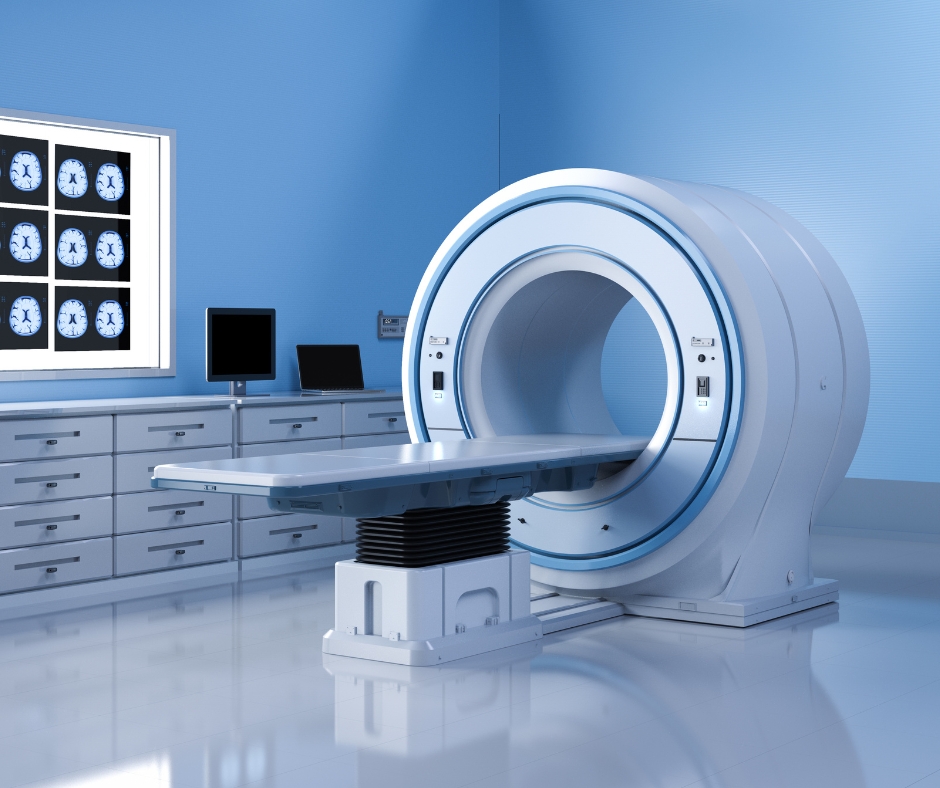
A low-dose CT (computed tomography) scan is an advanced medical imaging procedure that uses lower amounts of ionising radiation than traditional CT scans to create detailed, cross-sectional images of the body. By utilising refined X-ray technology and modern digital detectors, low-dose CT scans capture high-resolution images of internal structures while minimising radiation exposure. This diagnostic tool is most commonly used for targeted screening programs, particularly lung health assessments, where early detection of subtle tissue changes can significantly improve treatment outcomes.
Traditional CT vs Low-Dose CT
Traditional CT scans deliver a comprehensive view of complex anatomical regions by taking multiple X-ray measurements from different angles. While highly effective, traditional scans emit a higher dose of radiation to capture high-density details across diverse body tissues.
In contrast, a low-dose CT scan adjusts the X-ray tube current and voltage settings to lower the total radiation exposure, often reducing the dose by up to 75 to 90 percent compared to standard diagnostic CT protocols. This adjustment makes low-dose CT ideal for screening asymptomatic individuals or monitoring known conditions over extended periods without accumulating unnecessary radiation exposure.
Primary Uses and Diagnostic Applications
Low-dose CT technology is primarily utilised in preventative healthcare and routine surveillance. The most widely recognised application is low-dose CT lung cancer screening for individuals at high risk due to smoking history or occupational exposure. Beyond pulmonary assessments, medical practitioners utilise low-dose protocols for:
- Identifying early-stage lung nodules, structural changes, or early evidence of chronic obstructive pulmonary disease (COPD).
- Evaluating coronary artery calcification to assess cardiovascular risk profiles.
- Detecting renal calculi (kidney stones) in patients presenting with acute flank pain.
- Assessing sinus inflammation and structural blockages in chronic sinusitis.
- Monitoring follow-up cases where minimal radiation exposure is prioritized over high-contrast soft tissue differentiation.
Benefits of Low-Dose CT Imaging
The principal advantage of low-dose CT is the significant reduction in radiation exposure without sacrificing the clinical clarity needed to identify minor abnormalities. Early detection remains the most effective tool in treating pulmonary conditions, and low-dose scans can spot tiny nodules long before symptoms present.
The procedure is non-invasive, painless, and fast, typically taking less than five minutes to complete the actual scan. Unlike traditional X-rays, which offer a flat two-dimensional view, low-dose CT creates thin-slice cross-sections that allow radiologists to examine organ structures with exceptional spatial precision.
Safety and What to Expect During the Procedure
Low-dose CT scans are safe, non-invasive procedures that require minimal preparation. For most chest or sinus examinations, no contrast dye injection is needed, eliminating the risk of contrast-related allergic reactions or renal stress.
During the procedure, you lay comfortably on a motorised table that glides through a ring-shaped scanner. The technologist operates the equipment from an adjacent room while maintaining full visual and audio contact. You will be asked to hold your breath for a few seconds while the images are acquired to prevent motion blur. The low radiation output makes it a low-risk option for routine health monitoring when clinically indicated by a doctor.
Choosing Uniradiology Southport for Your Diagnostic Care
Access to advanced imaging technology and experienced radiological interpretation is essential for accurate health assessments. Uniradiology Southport provides patient-focused diagnostic imaging services on the Gold Coast, utilizing modern scan technology designed to keep radiation exposure as low as reasonably achievable. Our local team of sub-specialised radiologists and radiographers ensures every scan is tailored to your specific clinical needs, delivering timely and reliable diagnostic reports to your referring doctor.
Key Takeaways
- A low-dose CT scan uses up to 90 percent less radiation than a conventional CT scan while producing clear cross-sectional images.
- The primary clinical application is early lung cancer screening, alongside evaluations for kidney stones, sinus issues, and cardiac risk assessments.
- The procedure is fast, painless, completely non-invasive, and typically completed in under five minutes.
- Preparation is minimal, and most low-dose CT examinations do not require contrast dye injections.
- Early detection through low-dose imaging allows medical teams to identify subtle health changes before noticeable symptoms develop.